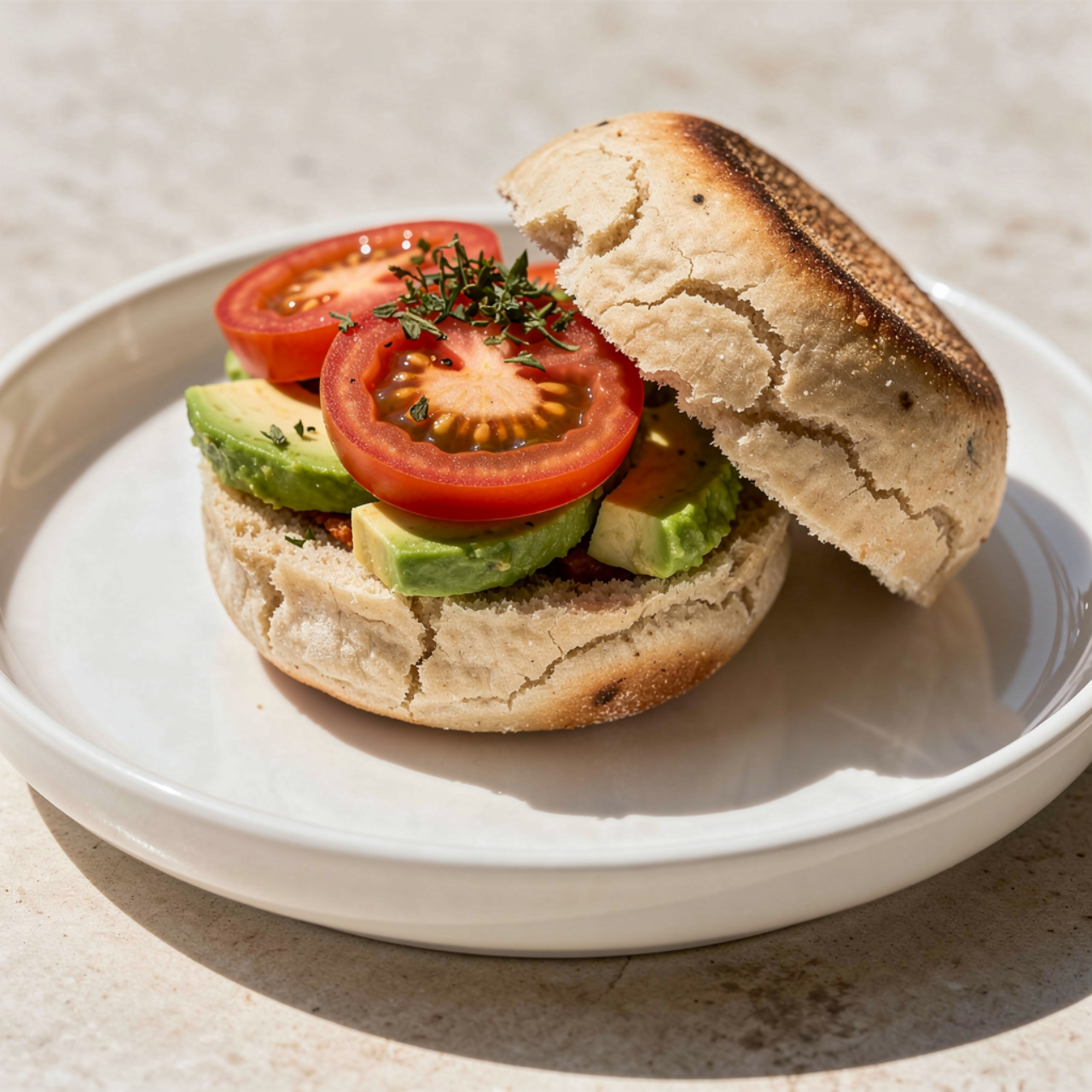
Sourdough Discard English Muffins
These sourdough discard English muffins are griddle-cooked to golden perfection with those signature nooks and crannies, made easy enough for a weekend baking project.

The Best Way to Use Your Sourdough Discard
If you keep a sourdough starter, you know the feeling. Every feeding leaves you with a jar of discard and a nagging guilt about tossing it. This is one of my favorite Sourdough Discard Recipes for exactly that reason. It turns something you'd otherwise throw away into a batch of golden, craggy English muffins with real depth of flavor and those signature nooks and crannies that just beg for melted butter.
This recipe has become one of the most requested Little Spoon Farm Sourdough Discard Recipes on the blog, and once you make a batch, you'll understand why. They're softer and tangier than the store-bought kind, and honestly not that much harder to make than a basic yeast dough.
Why This Recipe Works
Unlike a lot of Easy Sourdough Bread Recipe projects that ask you to feed and maintain an active starter, this one leans on discard, the unfed portion you'd normally pour down the drain. The discard adds tang and a subtle complexity, while a small amount of commercial yeast keeps the rise reliable and the timeline reasonable.
The muffins cook low and slow on a dry, cornmeal-dusted griddle rather than in the oven. That's what gives them their pale, freckled crust and that dense-yet-airy interior that's perfect for splitting with a fork.
Before we get cooking, having the right tools genuinely changes the outcome here. A heavy cast iron skillet holds steady, even heat so the muffins cook through without scorching, and a proper round cutter gives you clean, uniform muffins that cook evenly.
Working With Sourdough Discard
You don't need bubbly, active discard for this recipe, which is part of what makes it so forgiving. Cold, flat discard straight from the fridge works beautifully. If yours has a layer of dark liquid on top (sometimes called hooch), just stir it back in.
Chef's Tip: Keep a small jar in the fridge just for accumulating discard between feedings. When it hits about a cup, it's muffin day.
This is also a great entry point if you're newer to sourdough baking in general. Many bakers start with Little Spoon Farm Sourdough Scones or a simple loaf, then move on to muffins once they're comfortable working with discard in enriched, yeasted doughs.
The Griddle Method
The biggest mistake people make with Little Spoon Farm Sourdough English Muffins is cranking the heat too high. Because these muffins are thicker than a pancake, they need time for the heat to travel to the center before the outside burns.
Keep your burner on low to medium-low, and resist the urge to press down on the muffins as they cook. Pressing squeezes out the air pockets you worked so hard to build during proofing.
Ready to make it? Here is the full step-by-step recipe:
Sourdough Discard English Muffins
These sourdough discard English muffins are griddle-cooked to golden perfection with those signature nooks and crannies, made easy enough for a weekend baking project.
Ingredients
- 1 cup sourdough discard, unfed, straight from the fridge is fine
- 3 cups all-purpose flour, plus more for dusting
- 1 cup whole milk, warmed to about 110°F
- 2 tbsp unsalted butter, melted and slightly cooled
- 2 tbsp granulated sugar
- 2 1/4 tsp active dry yeast, one standard packet
- 1 1/2 tsp fine sea salt
- 1/4 cup cornmeal, for dusting the pan and muffins
Instruction
In a large mixing bowl, whisk together the warm milk, sugar, and yeast. Let sit for 5 to 10 minutes until foamy.
Add the sourdough discard, melted butter, flour, and salt to the bowl. Mix with a wooden spoon or dough hook until a shaggy dough forms.
Knead by hand for 8 minutes or with a stand mixer on low for 5 minutes, until the dough is smooth and slightly tacky but not sticky.
Place the dough in a lightly greased bowl, cover with a damp towel or plastic wrap, and let rise in a warm spot for 1 to 1.5 hours, or until doubled in size.
Turn the dough out onto a lightly floured surface and pat it down to about 1/2 inch thickness.
Using a 3 to 3.5 inch round cutter, cut out muffins and place them on a baking sheet dusted generously with cornmeal. Re-roll scraps as needed.
Sprinkle the tops of the muffins with a little more cornmeal, cover loosely, and let rest for 30 to 45 minutes until puffy.
Heat a cast iron skillet or griddle over low to medium-low heat. Do not grease it, the cornmeal is enough.
Cook the muffins in batches for 6 to 8 minutes per side, until deeply golden brown and cooked through in the center. Lower the heat if they are browning too fast.
Transfer to a wire rack to cool for at least 10 minutes before splitting with a fork to reveal the nooks and crannies.
Equipment
- Large mixing bowl
- Stand mixer with dough hook (optional)
- 3.5-inch round cutter
- Cast iron skillet or griddle
- Baking sheet
- Wire cooling rack
Notes
Serving and Storing Your Muffins
Once cooled, split each muffin with a fork rather than a knife. Sawing with a blade compresses the crumb, while forking it apart tears along the natural air pockets and gives you that classic craggy surface.
Serve warm with:
- Salted butter and good honey
- A fried egg and cheese for breakfast sandwiches
- Jam and clotted cream for a lazy weekend brunch
These muffins freeze wonderfully, so I always double the batch. Pull one out the night before, or toast it straight from frozen for a quick weekday breakfast.
If you love this style of baking, it's worth exploring more of the Sourdough Recipes Little Spoon Farm community keeps coming back to, from rustic loaves to tender scones. Once you get a feel for working with discard, you'll find yourself reaching for it in all kinds of baked goods instead of pouring it down the sink.